Water parameters
Aquarium Water Parameter Tracker & Test Log
Record fish tank water parameters, review test history, and spot trends before small changes become bigger problems. Aquarium Tracker keeps pH, KH, GH, ammonia, nitrite, nitrate, phosphate, salinity, and other readings organized by tank.
What does an aquarium water parameter tracker do?
An aquarium water parameter tracker records test results for each fish tank and shows how readings change over time. It keeps acidity, hardness, nitrogen-cycle values, nutrients, temperature, and salinity in one history so aquarists can compare tests with feeding, filtration, dosing, and water changes.
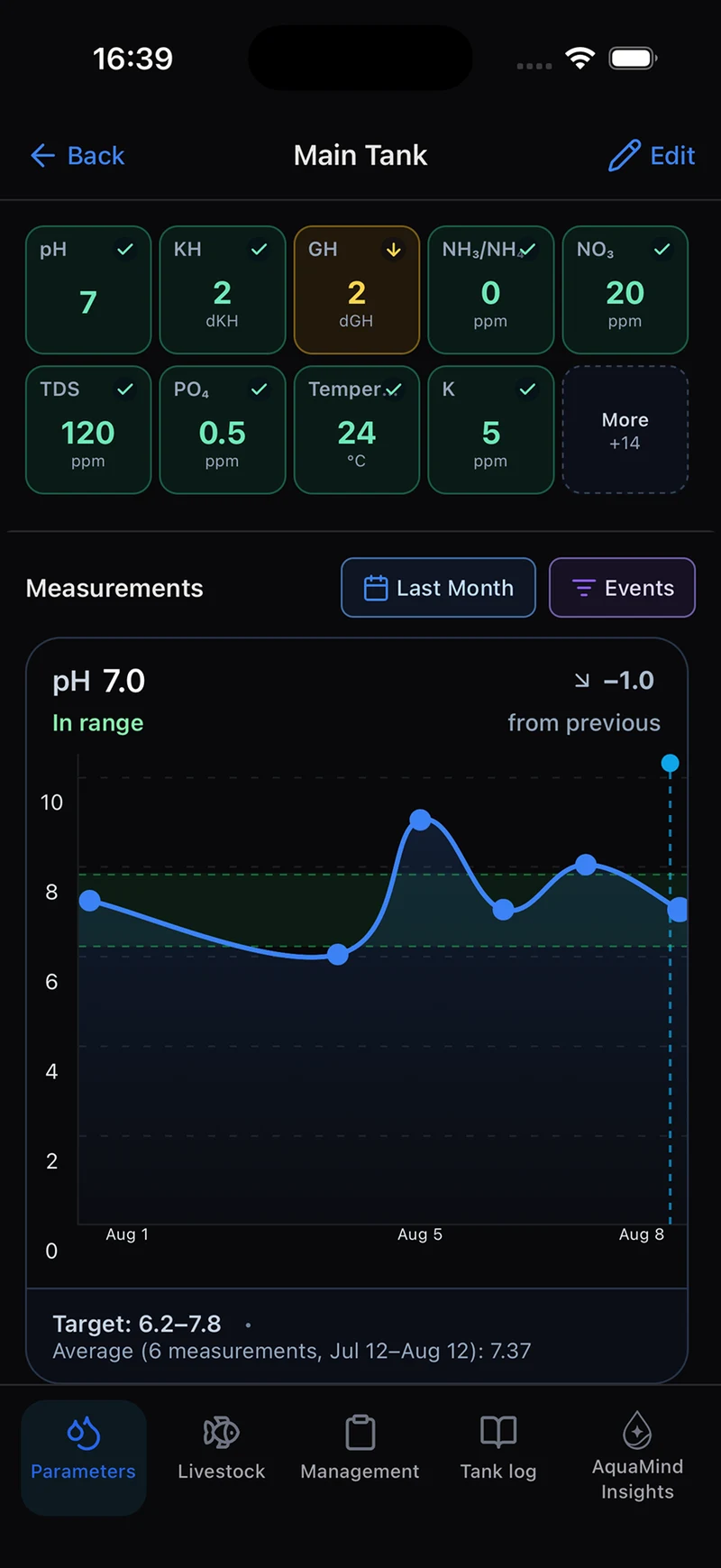
See your data clearly, then act on it
Aquarium Tracker turns every water test into a clear story. Log multiple parameters at once, filter by date, and review past measurements to understand what is really happening in each tank.
Log each test session
Add several parameters at once so strips, liquid-kit results, and meter readings become a complete aquarium test results log.
Learn from trends
Filter by date, look back across months, and spot patterns in nitrate, phosphate, hardness, salinity, and pH on clean charts.
Make every number useful
Set recommended ranges with horizontal lines on charts, sort parameters in your preferred order, and review everything in a full data table.
Parameters You Can Track
Track the aquarium water parameters that matter most for your fish tank, planted aquarium, shrimp tank, or reef setup, including detailed NO3 and PO4 readings.
Temperature
Tracks daily stability and helps you match conditions to livestock needs.
pH
Measures acidity or alkalinity and influences how comfortable fish and plants feel in the tank.
KH
Carbonate hardness helps stabilize pH and buffers sudden swings.
GH
General hardness reflects minerals like calcium and magnesium needed for healthy livestock.
Ammonia (NH₃/NH₄)
Signals early biofilter performance and should stay near zero in mature tanks.
Nitrite (NO₂)
Tracks the nitrogen cycle and should remain near zero in a stable aquarium.
Nitrate (NO₃)
Tracks waste buildup and fertilizer levels so you can balance plant growth and fish health.
Phosphate (PO₄)
Helps you keep nutrients in balance and avoid sudden algae swings.
TDS
Useful for shrimp and specialized setups where total dissolved solids matter.
Conductivity
Shows overall ion concentration changes, especially in planted or softwater tanks.
ORP
Reflects water oxidation-reduction potential, often used in reef and high-tech systems.
Salinity
Essential for brackish and marine tanks to keep livestock stable.
Iron (Fe)
Tracks micronutrient dosing for healthy plant coloration and growth.
Potassium (K)
Supports plant health and balances macronutrient dosing.
Magnesium (Mg)
Supports plant growth and influences overall water hardness.
Calcium (Ca)
Important for invertebrates, coral growth, and overall hardness balance.
Copper (Cu)
Track trace levels when using medications or tap water with copper content.
Zinc (Zn)
Optional trace element tracking for planted or reef tanks.
Manganese (Mn)
Monitors micronutrients tied to plant health and dosing routines.
Boron (B)
Supports plant growth and can be monitored with trace dosing plans.
Molybdenum (Mo)
Optional micronutrient tracking for advanced planted setups.
Why Tracking Water Parameters Matters
Consistent logs help you spot trends early, adjust routines before problems grow, and keep nutrient levels in balance. Over time, an aquarium test results log supports healthier livestock, steadier plant growth, and clearer decisions.
If you track nitrate and phosphate changes, a clear timeline makes it easier to see how nutrients respond to feeding, dosing, and water changes.
How Aquarium Tracker Helps
Aquarium Tracker lets you log aquarium test results in seconds, review history and trends, and compare numbers against your own ranges without complicated setup. You can track multiple aquariums side by side, making it easier to stay consistent.

Related water testing resources
Use these guides and tools when you want more context before changing a fish tank care routine.
Aquarium water parameters guide
Learn which values to track first, how often to test, and when a reading deserves action.
Aquarium heater size calculator
Estimate heater wattage from aquarium volume and the temperature rise above the room.
Aquarium test results log guide
See what to record with each test so old readings explain patterns instead of becoming scattered numbers.
pH, KH, and GH aquarium guide
Understand how acidity, carbonate hardness, and general hardness work together before changing water chemistry.
Nitrate and phosphate calculator
Compare NO3 and PO4 readings before changing fertilizer, feeding, or water-change routines.
CO2 calculator
Estimate dissolved CO2 from KH and pH readings before adjusting planted tank injection.
Beginner use
Learn ideal ranges, build testing habits, and focus on stability without overthinking the numbers.
Advanced use
Compare relationships like NO₃ and PO₄, use KH and pH with the CO₂ calculator, and validate long-term adjustments across multiple tanks.
More features
Explore more Aquarium Tracker features
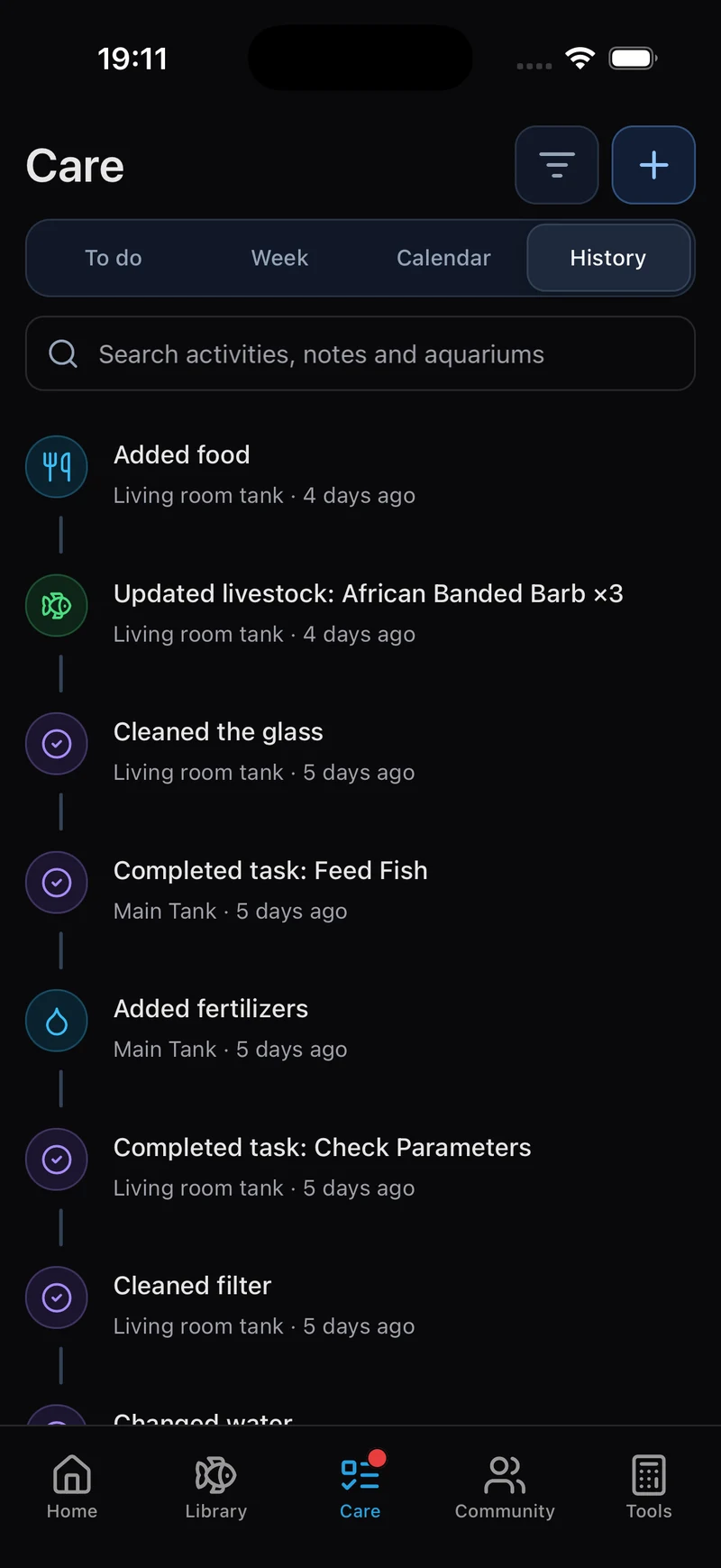
Aquarium Tasks & Reminders
Plan water changes, dosing, and filter care with dependable reminders.
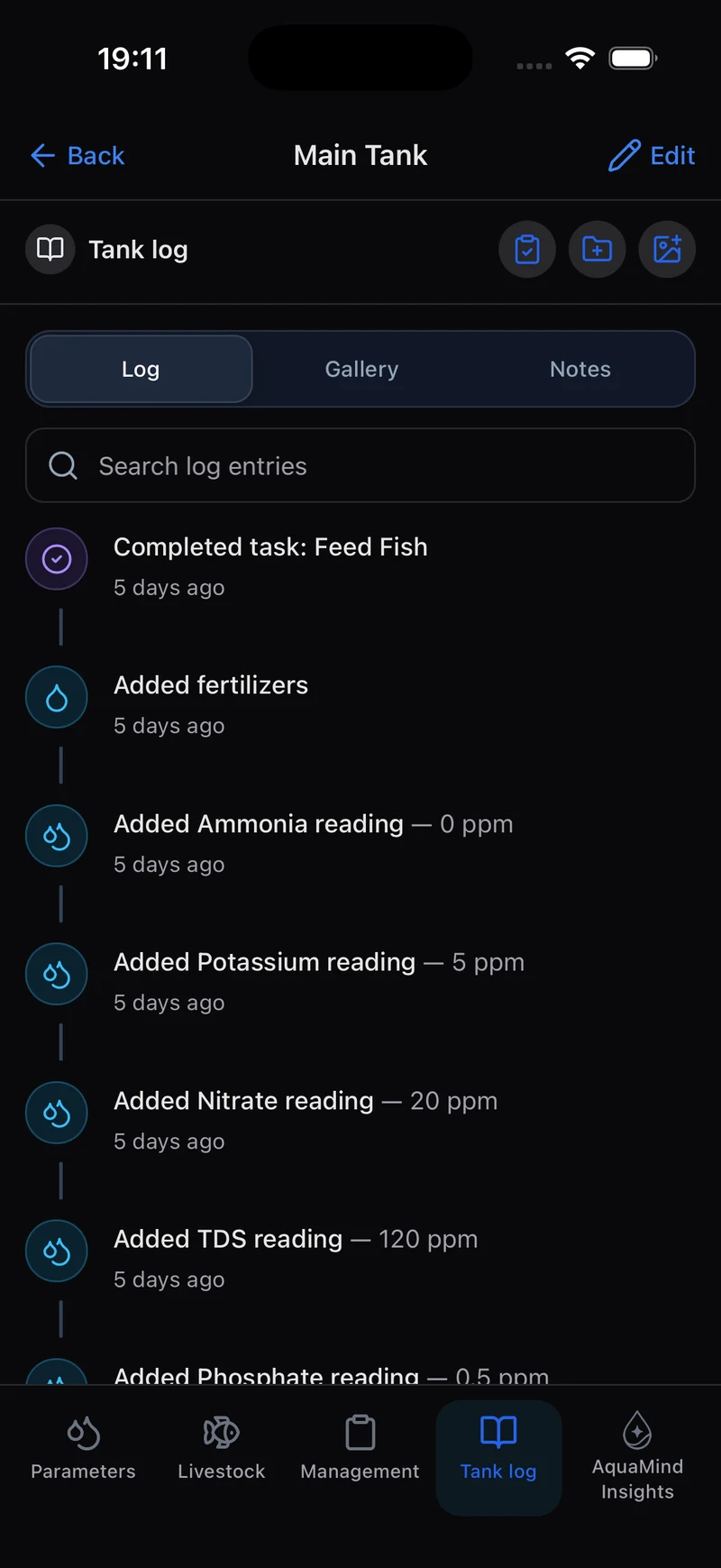
Aquarium Log & Timeline
Keep every activity in one timeline with notes and photos.
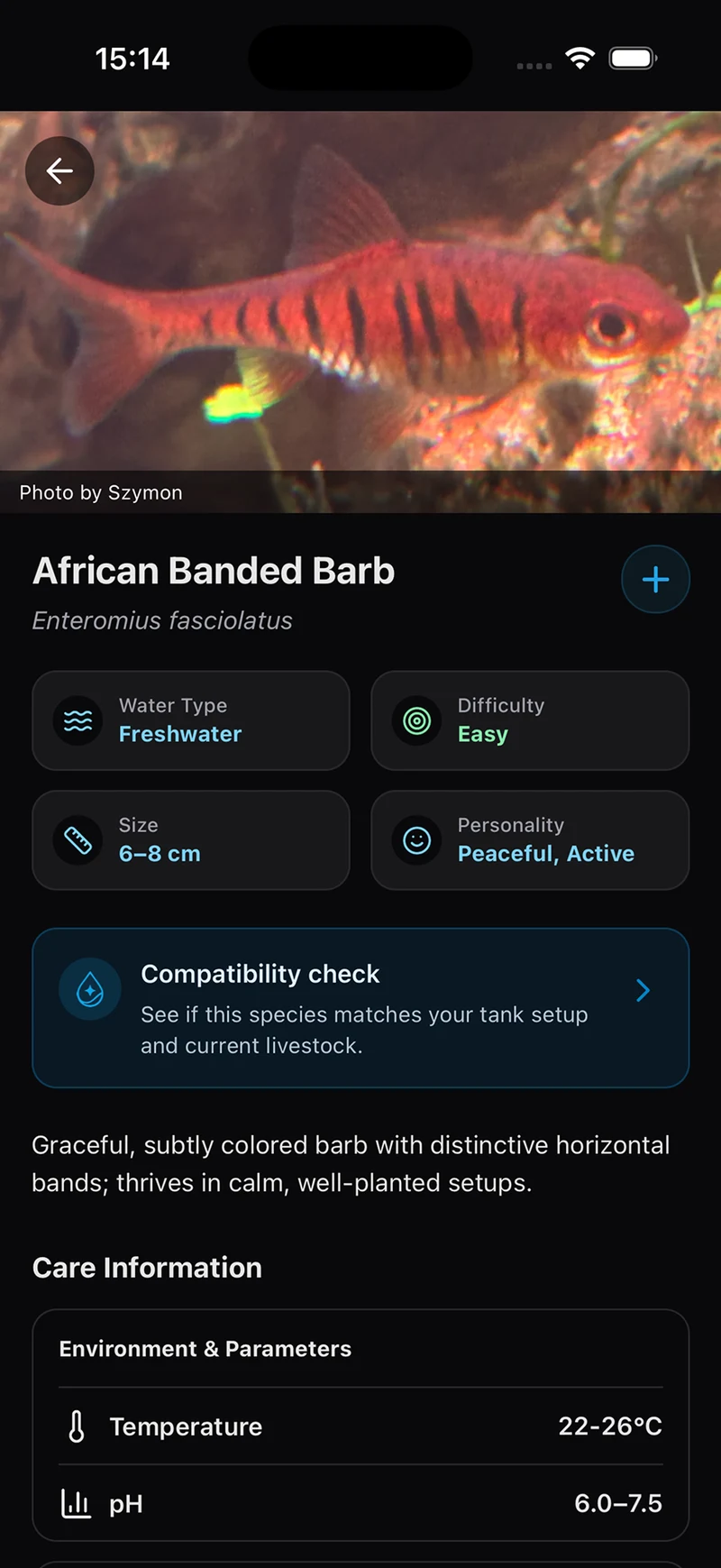
Livestock & Plants Tracking
Track fish, plants, invertebrates, and corals with clear counts.
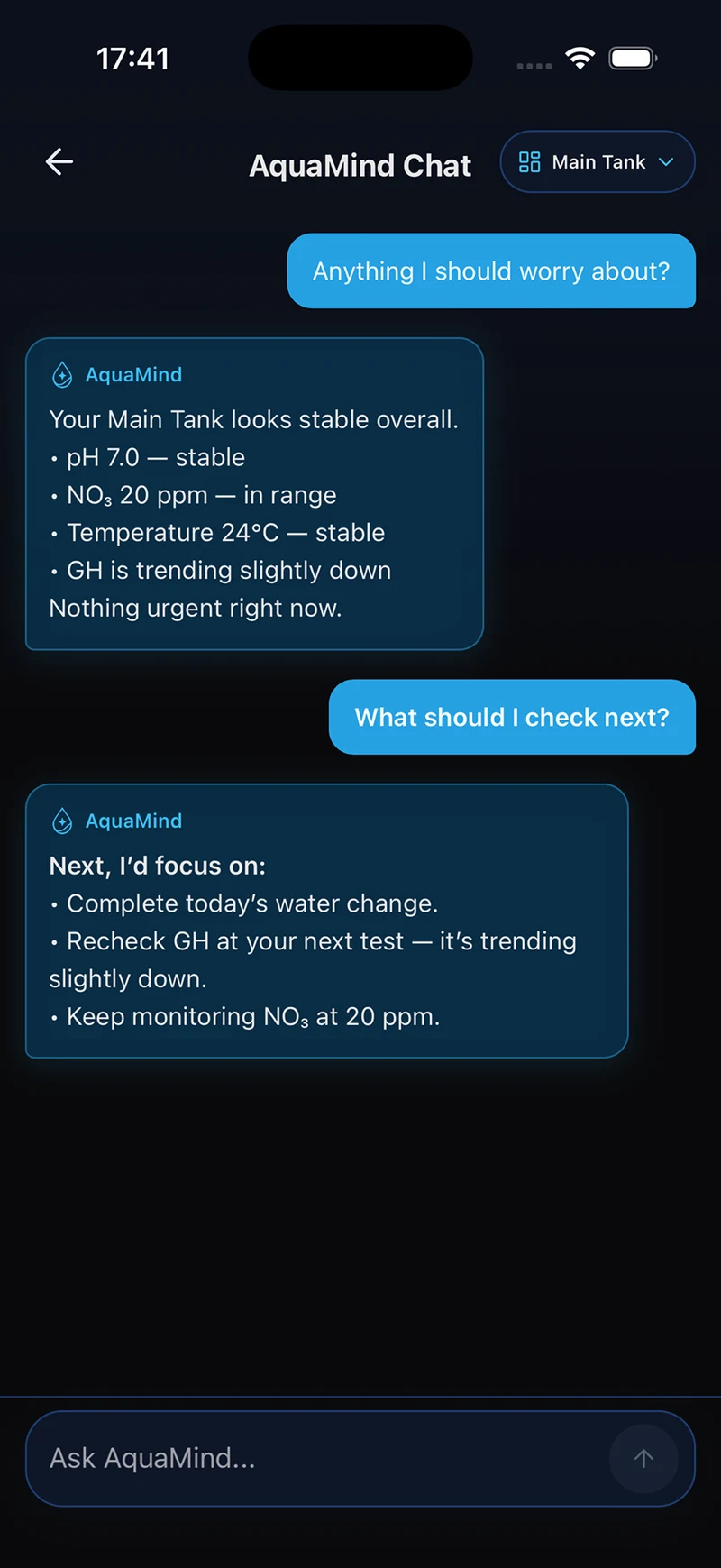
AquaMind Aquarium AI Assistant
Ask AquaMind questions and review personalized insights based on your data.
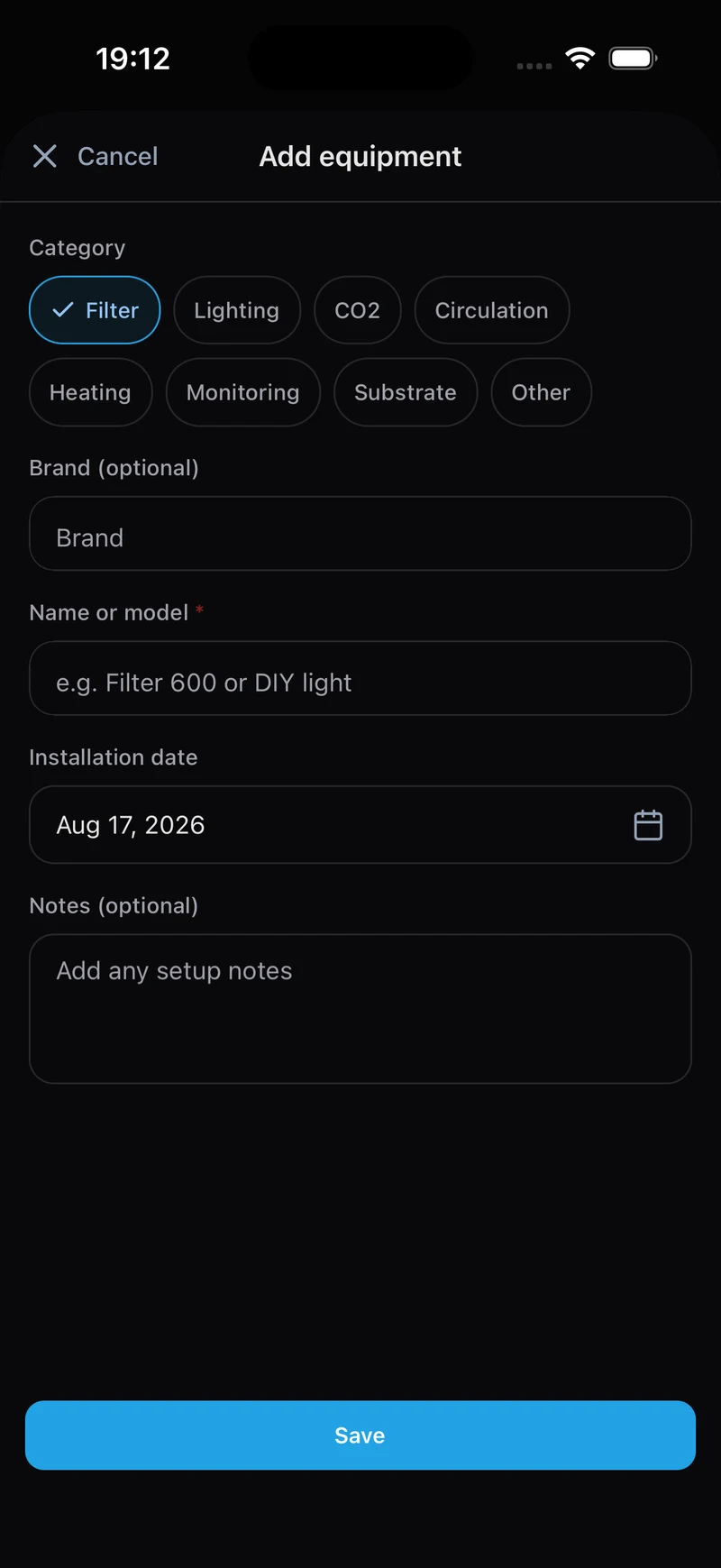
Equipment & Management
Manage equipment, fertilization, and feeding in one place.
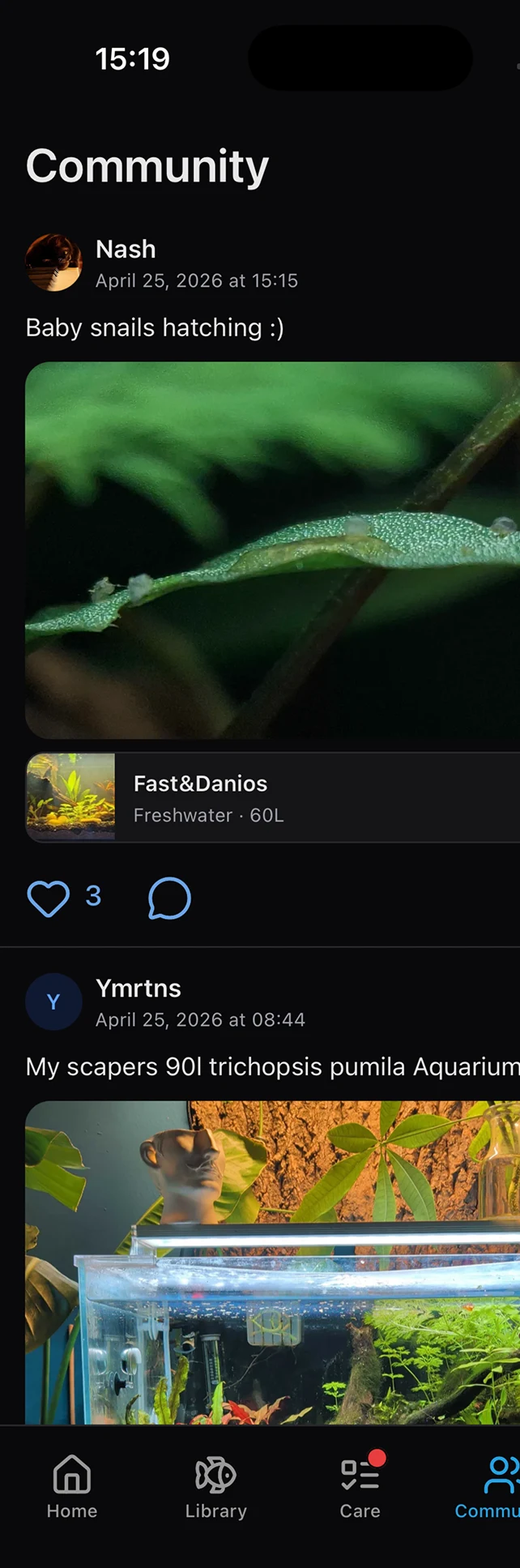
Community
Share photos, ask questions, and explore other aquariums.
Get the app
Track water parameters without the spreadsheet.
Use Aquarium Tracker to keep a clean aquarium test results log and monitor water parameters from any tank in one place.